
Check out this list of some female screenwriters by Lucy Hay.
Some of these may be familiar and unsurprising (writers of Erin Brokovitch and Thelma & Louise) but others may surprise you. Women are still very under-represented as writers of film!

Check out this list of some female screenwriters by Lucy Hay.
Some of these may be familiar and unsurprising (writers of Erin Brokovitch and Thelma & Louise) but others may surprise you. Women are still very under-represented as writers of film!

Someone asked me recently about my novel and then asked how I actually finished it. “I just kept working at it,” I said. It sounds glib but, yes, it’s as simple as that. “Bird by bird,” Anne Lamott says. Like anything else that you want to get done, you’ve just got to keep doing it.
I love the idea of National Novel-Writing Month (NaNoWriMo), though I have not actually done it. I have, however, completed drafts of three novels on my own, one of which has been revised extensively. The one time I attempted to participate in NaNoWriMo I stopped, mostly because I realized I needed to do a lot more research for the historical novel I was preparing to write and wasn’t really ready to sit down and write out a draft of it. I had happened upon the concept by chance too late in the game; it is something that at least in this case, needed some pre-planning.
I do like the idea of giving focused, concentrated energy and attention to a project. I think to some extent, it’s what one needs to do, and there’s good reason why one of the guidelines of NaNoWriMo is to use this time to write an initial draft of the novel. Many writers report that their first drafts are written quickly, in passion and heat. The best way to keep going is to not let yourself get tripped up by your own internal editor (see my previous post on this) or stop and give in to misgivings and doubts. Just put all that aside. Dedicating a certain amount of time every day for a month can be very productive…and can also be the good foundation for a habit of writing, which for a long-term project, is a necessity.
Here’s some advice for getting through this month.
For more information about NaNoWriMo, including “pep talks,” forums, and inspirational tweets, check out nanowrimo.org.
Check out this post on advice for specific words to cut. Zinsser would be proud!
http://dianaurban.com/words-you-should-cut-from-your-writing-immediately
The concept of voice in writing is one of the hardest to define and teach to writers. Yet having a distinct voice is important for anyone who wants to be noticed—whether it’s for writing a blog, writing a novel, or getting followers on Twitter.

A writer’s voice is influenced and characterized by a lot of different things. And, while a writer’s voice can encompass a range of writings from one author, the voice can also vary depending on the genre and purpose. Still, for established, respected and liked authors, there are usually a few general areas that we can look at that can help us understand the concept of “voice.” These include tone, rhythm, language, subject, and attitude.
The best way to get a sense of the concept of voice is to look at and study the writings of different authors—especially those with, well, different voices. Humorous writers are probably the most distinctive when it comes to voice.
Here’s an excerpt from an essay by popular comedy-writer David Sedaris called “Standing By,” about his observations from travelling.
It was one of those situations I often find myself in while travelling. Something’s said by a stranger I’ve been randomly thrown into contact with and I want to say, ‘Listen, I’m with you on most of this, but before we continue I need to know whom you voted for in the last election.’…. Of course, you can’t just ask people whom they voted for. Sometimes you can tell by looking, but the grandmother with the many bracelets could have gone either way.
David Sedaris is funny because he’s achingly honest and sincere, and shares the same kind of bewilderment of others that we all share. He seems to voice what many of us might be thinking but would never actually say.
Margaret Atwood, one of my favorite writers, is funny for the way that she plays with language and makes us look at things a little differently. In “The Female Body,” she plays with the word “topic,” making fun of an editor’s invitation for her to write on this “topic.” Atwood often writes with fragments, using a lot of concrete objects and images, as we can see from the following excerpt:
I agree, it’s a hot topic. But only one? Look around, there’s a wide range. Take my own, for instance.
I get up in the morning. My topic feels like hell. I sprinkle it with water. I brush parts of it, rub it with towels, add lubricant.
Ever the writer and not the theorist, Atwood insists on the physicality of the body and uses irony to show it.
Voices can be sarcastic, ironic, sincere, encouraging, harsh, gentle, silly, offensive, lazy, convoluted, hoity-toity, prosaic, poetic…and so much more. If we read authors from the Victorian area, we inevitably see longer sentences, more description, and a lot of “dear reader” interludes. Yet even within specific trends, we can spot distinctions in voice. Think Charles Dickens versus Louisa May Alcott. Their subjects, their attitude, and their use of language are somewhat different, distinct to their own voices.
Of course, a lot of other factors influence voice, and the more popular voices harness the trends of the time. Cleary, writers with a fast-paced, witty style that translates well to sound bites and tweets are probably going to go viral faster than someone who likes to write long, descriptive paragraphs. It’s something to be aware of, yet you also want to be careful of writing in a way that is not entirely authentic for you. Find a way to be authentic—don’t write simply to be read. People pick up on inauthenticity.
Mary Pipher, now a well-known author of several influential books, describes this struggle in Writing to Change the World:
I struggled for years to find my voice. At first, I wrote in a self-conscious way: I sat down and ‘committed the act of literature.’ My anxiety about writing caused me to write in a constipated, bland way that sounded clunky, pompous, and effusive all at the same time. I was imitating other writers and producing inferior work.
This is not to say that imitating others—if done in a conscious way—can’t be a productive method for finding your voice. Mimicking others, like trying on clothes, helps you become aware of what works well for you and what doesn’t. You eventually bring your own flair to it and make it yours.
Pipher says that once she wrote as she talked, she felt she found her “authentic” voice. Yet be careful of following this prescription–nobody writes exactly as they talk. There would be some pretty boring, repetitive stuff out there if we did! I think what she means here is that by allowing herself to see writing as a form of talking—not as an avenue to impress people with her dazzling intellect—she was able to give herself permission to say what she wanted to say how she wanted to say it, and in a way that would be easily understood.
How do you know or find your own voice? Becoming aware of the concept of voice can help. So can becoming aware of the styles of various writers and how they affect you as reader. As much as I’d like to, I can never approach the brilliant linguistic playfulness of a Margaret Atwood. I can, however, look to what makes me laugh, to what the things are that I find funny, curious, strange, or ironic. You also might think about how you present yourself when you are at your best. What do people like about you? That you are down-to-earth? That you have good advice? That you get right to the point? That you have great stories? These are just some of the ways that writers might have a unique aspect of their voice. Find what works for you and run with it.
Mary Pipher quote from: Writing to Change the World (New York: Riverhead, 2006): pp. 42-43.
 One of my favorite lessons from Natalie Goldberg’s Writing Down the Bones is the lesson of detachment. In one chapter called “We Are Not the Poem,” Goldberg reminds us: “Don’t identify too strongly with your work.” She means here not to become too wrapped up in a particular piece of writing: “The real life is in writing, not in reading the same ones over and over again. We constantly need new insights, visions.”
We can also remember this is a way of checking our egos when we are asking for feedback on our work. I have been repeatedly impressed by the brave students I have seen who have written stories about themselves and their lives—difficult, hard, sad stories about depression, suicide, and loss. These students have laid these experiences bare and eagerly awaited feedback. They wanted feedback because they wanted to make their writings the best they could be. They recognized that these stories were important, and that sharing them was powerful, and that by checking their egos and hearing honest feedback, they could make their stories even better. They recognized that their writing was imperfect, perhaps confused, but in being read and in being helped to make their writing clearer, they were able to tell those stories, those wonderful, delicate stories that stay with you, that make you remember, that make you feel connected, that remind us all of our suffering and imperfections.
It almost seems paradoxical—how can you detach from something that you are investing so much energy into? In a way, it’s like a religion. You have to trust, and have faith. For some reason the image that comes to me is of a railway car being detached from an engine. Your ego is like an empty (or even full) cargo car. The engine drags it behind. It may slow it down. Perhaps the fuel you need is in it. Instead, detach the car from the engine. Put the fuel in the engine. Make the engine the glorious best it can be. Let it chug away into magnificent glory. Of course, I don’t know what use an engine has when it’s not actually pulling anything—perhaps this analogy needs some work. Still, I love the idea of the actual physical detachment. Make the engine the best it can be. Make sure everything is working and in place and that the engineer who is driving it is competent and alert and not swigging from a vodka bottle. Once everything is in place, unhook that cargo car from the engine. Let your writing out into the world and just watch what happens, as if you were merely someone waiting for it to pass by, stopping to marvel at it as a product of human inspiration and creation.
Do you need objective feedback and an editor who will be thorough but encouraging? If so, please contact me!

Two: The Writer and Reader Working Together
Too often students approach peer feedback with the idea that they are going to share what a writer is doing “wrong.” That’s why I always tell them:
“The writer is always right; the reader is always right.”
Then we talk about how the writer obviously wrote something in a particular way for a reason. The reader’s interpretation is just that—his interpretation. This does not absolve writers and readers from laziness or sloppiness. The writer should try as much as possible to have a clear purpose and to execute it clearly. Sometimes, however, the writer needs to ‘hear back’ what the reader is seeing in order to decide if she’s been successful. Similarly, the reader should give the writing full attention so he can give good feedback. In the end, the feedback is information for the writer. Readers have opinions based on a variety of experiences, knowledge, and prejudices. Great writers find readers who consistently give them reliable feedback. These readers might be a friend, spouse, partner, or editor. It makes sense that readers and writers who work together over a long period of time get the most of out of it. As we learn more about where each person is coming from, we are able to give and receive more constructive feedback. At the same time, just as we need to take a break and look at our writing with a new set of eyes, new readers can provide just the kind of insight we might need.
Writers and artists throughout history have flourished with the help of groups who gather together consistently and support, encourage, and critique each other. The magic of these groups is, of course, the shared interest and passion. This shared interest and passion can be much harder to attain in the classroom. However, having a shared purpose—producing good work—can be enough. It is remarkable and inspiring to see how much students start to care about their work when they start having other students read it. While there are always a few who are hesitant to share, the committed writers are eager to share and to hear what readers have to say, not to stroke their egos but because they really care about doing a good job.
In the previous post, I indicated some foundational exercises students or new writers can do when sharing work. The next step in sharing work is laying down some ground rules. Some groups like to insist the writer stays quiet; others don’t think this is necessary. Usually readers are encouraged to keep their comments confined to global questions and reflections, rather than close editing. It can often be helpful for the writer to simply talk about what she is working on, as was done in the “just listening” exercise. Having some time alone with the piece, reading it a couple time, jotting down comments can be really productive. Readers are most helpful when they:
*Tell writers what they think the piece is about (This may seem obvious, but it can often be pretty illuminating. )
*Ask questions
*Take note of inconsistencies
*Encourage writers for more
*Describe the picture they see, feelings they experience, or thoughts they had on reading a passage.
Traditionally, the writer’s workshop has been modeled on putting the teacher at center stage, as the final arbiter of taste. For writers who want nothing else but to write, this kind of atmosphere may be useful in building up resilience in order to withstand rejection. For other students and writers, however, who really want to know how their work affects readers, a more conscious, constructive form of workshop is needed.
By employing and cultivating skills like active listening, mindful reading, question-asking, and a deep respect for the roles of both the writer and reader, we can encourage students to take ownership of their writing. We can hear feedback in a way that will encourage us to return to the desk and keep on working, until our work is the very best it can be.
Suggestions for Further Reading:
Sheila Bender, Writing and Publishing Personal Essays
I love this book. Bender lays out a simple but very effective technique for responding to writing. This is great for anyone interested in writing nonfiction–or any kind of narrative.
Ursula K. Le Guin, Steering the Craft
Sci-fi author Le Guin gives some no-nonsense advice on writing (for fiction writers), including an appendix with guidelines for writers’ groups.
Natalie Goldberg, Writing Down the Bones
Goldberg often talks about getting together with other writers to write and share work. Her exercises provide some great starting points for getting the pen flowing.
Part One: Setting The Stage for Effective Feedback
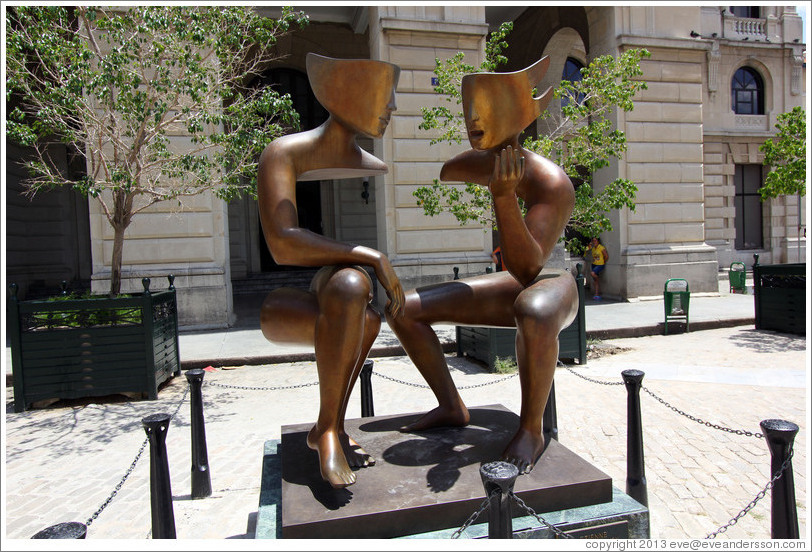
For students, sharing their work is frequently the most anxiety-inducing—yet also the most satisfying—element of a writing workshop. To have someone read or listen to your work and give thoughtful feedback is a gift for a writer. While it’s certainly nice when someone says they like what you’ve written, to have someone give you specific details of how they experienced your work can be very enlightening, if done with skill and thoughtfulness on both sides.
When preparing students for the act of sharing and talking about their work, I do so in a specific sequence of activities in order to develop skills in workshopping.
The first activity I do is “just listening.” We so rarely simply listen to each other in our lives, and having someone to bounce ideas off, who is not going to judge or try to sway you in different directions can be invaluable. This is especially effective in the draft or early-ideas stage. Writers need to figure out their ideas, develop them, build on them—not have them shut down. With “just listening,” writers share ideas and perhaps an initial draft of their work. The “reader” simply listens, giving the writer full attention. (This is not as easy as it sounds, and I tell students that their minds are likely to wander off—just try to watch out for that!) Hold back from jumping in and offering any thoughts. It might be helpful to set a timer—somewhere between 2 and 5 minutes is good for a starting point. After we do this, I suggest to my students that they try this with friends or partners—that this in itself can make a difference in a relationship.
The next stage is to ask questions. The idea is to help the writer develop and draw out their ideas. Open-ended questions, or questions designed to go deeper and give more details, work the best here. Questions that start with how, what, where, who and why are optimum. It is important that the reader/listener keep from providing critique or evaluation. The idea here is to simply have a dialogue.
These first two activities set the stage for feedback that is just that—feedback. I am careful not to use words like “editing” or “evaluation.” I want to make it clear that the purpose of this is not for students to “correct” each other or to point out mistakes, but to dialogue and to help each other develop their ideas. You can use this approach by asking your readers to simply listen, and/or to ask you questions about your work. Make sure that your readers know this is an early draft and that you are not at the point yet where you are looking for comments on specific areas like word choice, syntax, or other specifics. This is a gray area, of course—sometimes looking at specifics gives rise to a bigger issue—but for the most part, both you and your reader should understand the purpose in the early stages is to grow and develop conceptually, not to hammer out specific choices. For readers who are not used to giving this kind of feedback, giving them a list of questions can be helpful; another option is to simply ask the reader to listen. Make sure also that you are getting—and that, as a reader, you are giving—encouragement and support. Like the first steps or first words of a child, a writer in an early draft often needs this. For this reason, when reading early drafts from students and fellow writers, I focus on asking questions, pointing out areas I’m interested in, and asking for more. Students are then encouraged to further develop their ideas. In the end though, you as a writer need to think about what you most need at the stage you are at. Don’t be afraid to ask for it! The more guidance you can give the reader, the more helpful the feedback will be.
In the next post, I’ll talk about the next stage in the writer-reader feedback process and explain my title: “The Writer is Always Right; The Reader is Always Right.”
Photo of “La Conversacion” in Havana, Cuba– copyright Eve Andersson
http://www.eveandersson.com/photo-display/large/cuba/havana-old-havana-plaza-san-francisco-de-asis-etienne-la-conversacion.html
 Rarely do words come out in writing the way you want them to sound. And, of course, they never come out perfectly correct. Editing is one of the most important steps in writing, yet editing our own work is pretty difficult. Professional, published writers usually have their work edited by professional editors, though with the increasing use of instant-gratification publishing (like this post, like Twitter, etc), editing often goes by the wayside.
Editing is really a number of steps in the writing process that includes drafting, revising, and multiple levels of editing. For this post, let’s focus on the type of writing that you usually have to edit yourself. These are posts like this one, business letters, and the like. Here are some strategies that might help ensure your writing gets read–and not picked apart for errors:
1. Ask: What is the minimum I need to say without losing my reader(s)? Remember, readers can’t read your mind. Your message has to be clearly stated. Explain when necessary–but not more than necessary.
2. Cut, cut, cut. Go on a merciless hunt for unnecessary words– what writer William Zinsser calls “clutter.” [Here’s a fairly recent article by Zinsser (may he rest in peace).]
3. Read your writing aloud. You’d be surprised how many issues you will pick up on just by hearing your work.
4. Use spell-checkers and grammar-checkers, but don’t give these programs the final word. These are good for flagging issues–not so good for correcting them. I don’t know how many times in students’ papers that I’ve seen “defiantly” used when “definitely” was meant. Make sure that, when choosing from the list of correctly spelled words, you click the right word. Spell-checkers don’t check meaning. Ditto for grammar-checks. Use a dictionary and a good grammar reference to help you figure it out. Don’t get hung up on fussy stuff with grammar. The most important thing is that your message is clear.
5. Don’t press send! Give yourself a cooling off, even if it’s only 5 minutes to walk away, take a look around, get a snack. Read your writing again just one more time before you send it.
More than likely, your writing will not be perfect. There will be an error sooner or later. Someone will object to your comma usage. I think of those final editing stages as putting on the right clothes and accessories to impress. It shows you’ve made an effort and you care. And if you want to be read, you need to show that you take your writing seriously. Editing your work is nothing less than courtesy for your readers as well as showing integrity for your own ideas. How will you be taken seriously if your work is always riddled with errors? If you are weak in some areas, work on those. The more you write, edit and pay attention, the better you’ll get. Like anything else, all it takes is some practice. *
When Should You Hire a Professional Editor?
If you want your ideas taken seriously, a professional editor is a must for anyone working on a book-length work. Investing in a professional editor is highly recommended if you are readying a book manuscript for submission or self-publishing your own work–or even before submitting work to a publisher who has already signed a contract. Editors can also help with shorter works, like articles. And if writing scares the bejeezus out of you, a writer/editor can take your ideas and help you work them into a draft, then polish it up for you.
 ABC Editorial Services